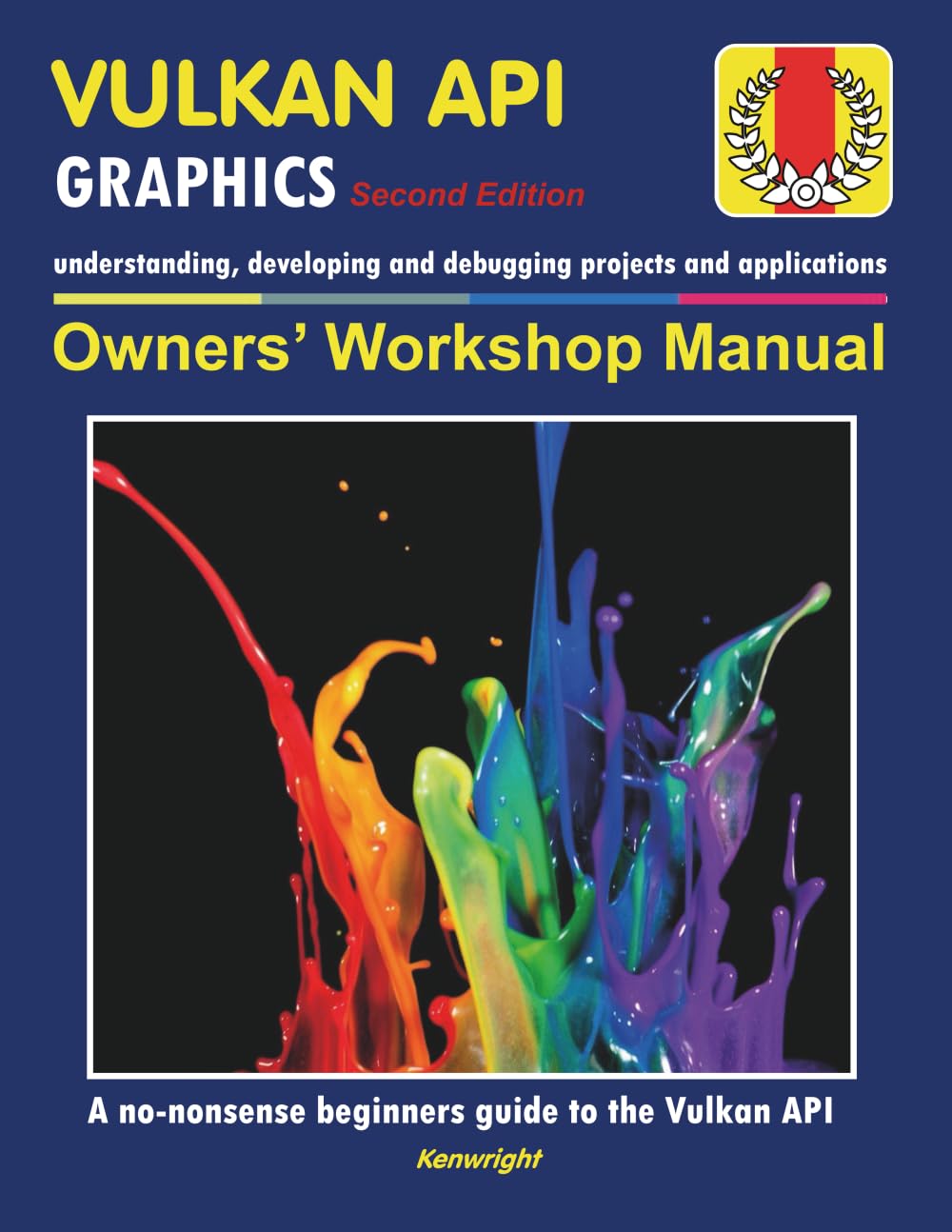
Vulkan API - Owners' Workshop Manual (2nd Edition) - Computer Programming (Beginners Onwards): Everything You Need To Get Started With The Vulkan API

Vulkan API - Owners' Workshop Manual (2nd Edition) - Computer Programming (Beginners Onwards): Everything You Need To Get Started With The Vulkan API

⭐ 4.8/5 Stars 🔥 Bestseller 📚 Editor's Choice

"Vulkan API - Owners' Workshop Manual (2nd Edition) - Computer Programming (Beginners Onwards): Everything You Need To Get Started With The Vulkan API (Paperback)" offers a analytical perspective on programming, as it dissects the challenges and opportunities within the technological evolution.

ISBN: 979-8265876119
Publication Date: September 6, 2026

About This Book

Detailed Description

This book provides a structured yet imaginative approach to vulkan, bridging theory with practical application. By combining visionary ideas with grounded examples, "Vulkan API - Owners' Workshop Manual (2nd Edition) - Computer Programming (Beginners Onwards): Everything You Need To Get Started With The Vulkan API (Paperback)" empowers readers to engage deeply with the future of compute. "Vulkan API - Owners' Workshop Manual (2nd Edition) - Computer Programming (Beginners Onwards): Everything You Need To Get Started With The Vulkan API (Paperback)" is a compelling exploration of programming, offering readers a nuanced understanding of its evolving role in modern society. From emerging trends to foundational principles, "Vulkan API - Owners' Workshop Manual (2nd Edition) - Computer Programming (Beginners Onwards): Everything You Need To Get Started With The Vulkan API (Paperback)" serves as a versatile guide for navigating the landscape of compute.

Key Features

  • Expert commentary and insider perspectives from leading professionals
  • Step-by-step walkthroughs for practical implementation
  • Downloadable templates and adaptable tools for immediate use
  • Hands-on projects that reinforce learning through doing
  • Curated resource lists for continued learning and growth
  • Scalable strategies tailored for diverse teams and environments

Quick Facts

Rating:
4.8/5 (247 reviews)
Format: Paperback & eBook
Pages: 342 pages
Language: English
Genre: programming compute vulkan graphics
Purchase on Amazon Add to Goodreads

Reader Reviews & Insights

Layla Peterson
Layla Peterson
• Publisher

The storytelling woven into the analysis adds a human touch that makes the content both memorable and meaningful.

July 10, 2026
Sarah Johnson
Sarah Johnson
Professional Reviewer

That section was brilliant. I've already applied those techniques with great success in my current projects.

July 7, 2026
Isaac Thompson
Isaac Thompson
• Editor

The storytelling woven into the analysis adds a human touch that makes the content both memorable and meaningful.

June 22, 2026
Sarah Johnson
Sarah Johnson
Professional Reviewer

I felt like the author was guiding me personally. The tone was encouraging and the advice felt tailored to real challenges.

July 10, 2026
Samuel Kim
Samuel Kim
• Narrative Psychology Researcher

The depth of research is impressive, yet the writing remains clear and engaging throughout. A rare balance.

July 18, 2026
Sarah Johnson
Sarah Johnson
Professional Reviewer

This book didn’t just inform—it inspired me to rethink how I approach graphics in my own work.

July 9, 2026
Michael Chen
Michael Chen
Industry Expert

I loved the mix of academic depth and practical relevance. It’s a rare balance that this book achieves beautifully.

July 15, 2026

Pro Tips & Tricks

Enhance your reading and learning experience

Pomodoro Power
Studying

Study in 25-minute focused intervals with 5-minute breaks to maintain energy and concentration.

Digital Eye Care
Health

Follow the 20-20-20 rule: every 20 minutes, look at something 20 feet away for 20 seconds.

Active Recall
Learning

Quiz yourself regularly instead of rereading. It strengthens memory and understanding.

Code Documentation
Programming

Write documentation as if the next person reading it is a violent psychopath who knows where you live.

Learning Stack
Learning

Use the Feynman Technique: teach what you learn to someone else to identify knowledge gaps.

Use Mnemonics
Learning

Create acronyms or visual cues to remember complex information more easily.