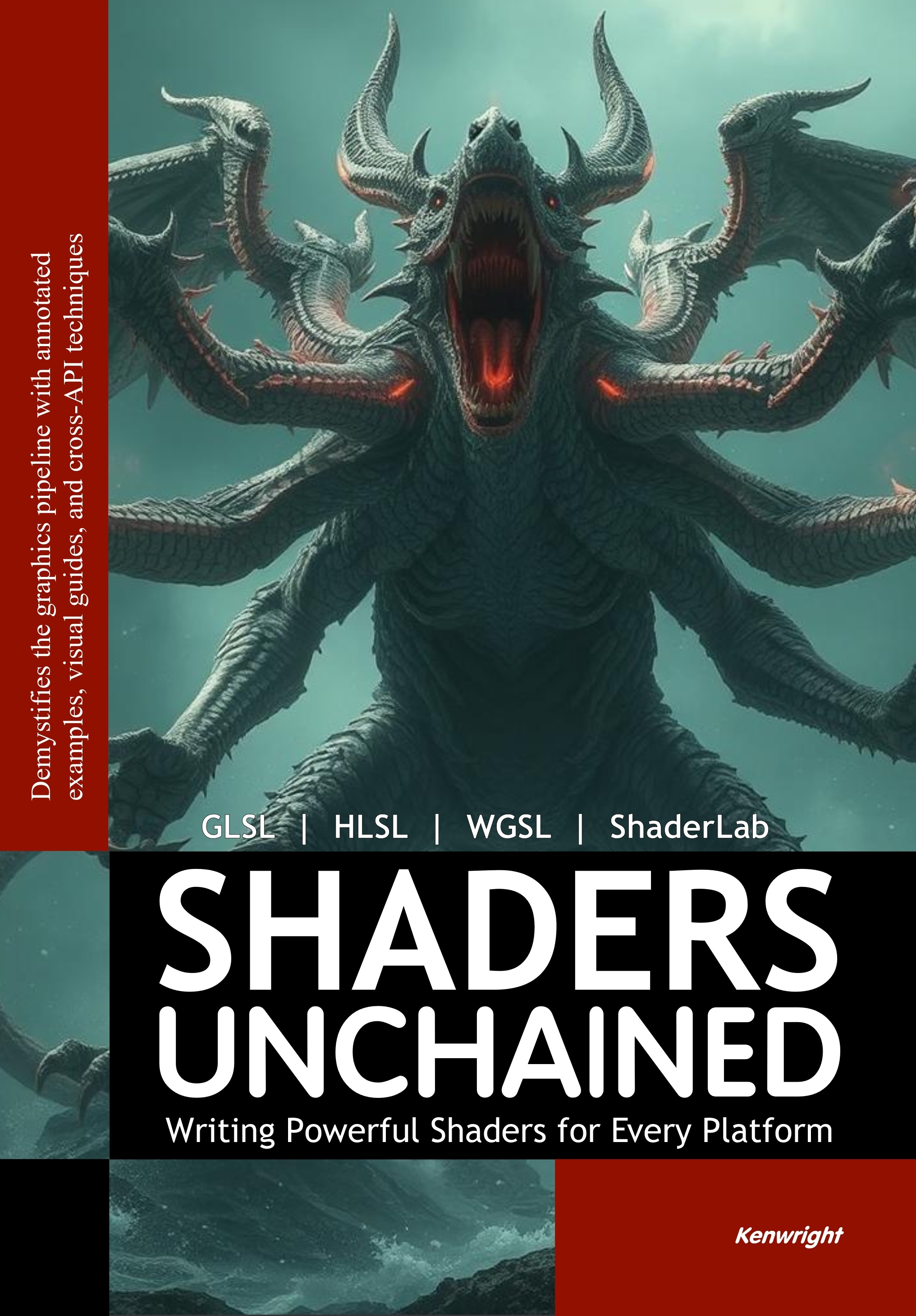
This authoritative work, "Shaders Unchained: Writing Powerful Shaders for Every Platform", delves into Shaders and its transformative effects on the software architecture.
Each chapter builds momentum, weaving together case studies, frameworks, and forward-thinking analysis that elevate the discourse. Readers will appreciate the book’s clarity, especially in unpacking complex ideas around Shaders without sacrificing technical rigor. By combining visionary ideas with grounded examples, "Shaders Unchained: Writing Powerful Shaders for Every Platform" empowers readers to engage deeply with the future of GLSL.
After 15 years in the industry, I rarely come across something this refreshing. Every page delivers insights that are both practical and forward-thinking. A must-have for professionals.
Great point! I especially appreciated the chapter on implementation strategies—it offered clear, actionable steps I could use immediately.
July 15, 2026
I highlighted nearly every page—this book is packed with insights that deserve to be revisited and shared.
This book didn’t just inform—it inspired me to rethink how I approach WGSL in my own work.
July 20, 2026
This book completely reshaped my understanding of Shaders. The author's innovative and hands-on approach makes learning feel effortless and exciting.
Absolutely! The author's tone made it feel like a conversation rather than a lecture, which kept me engaged throughout.
July 21, 2026Couldn't agree more. The real-world examples made all the difference for me—they brought the theory to life.
July 15, 2026Stay updated with the latest in tech literature
Age is just a number in these five great sci-fi and fantasy novels centering older characters. Plus, bonus science fiction must-reads....
Read MoreI admit, I sometimes pay a premium at a certain dinner theater chain with a lobby-slash-bar designed to look like classic indie video stores of yore. ...
Read MorePreview is one of the most useful apps that ships with your Mac....
Read MoreEnhance your reading and learning experience
Create acronyms or visual cues to remember complex information more easily.
Take brief notes after each chapter. Summarizing helps cement knowledge.
Scan headings, summaries, and key terms before deep reading to build context.
Use the Feynman Technique: teach what you learn to someone else to identify knowledge gaps.
Drink water during study sessions to keep your brain alert and functioning well.
Write documentation as if the next person reading it is a violent psychopath who knows where you live.
Sarah Johnson
Professional ReviewerAbsolutely! The author's tone made it feel like a conversation rather than a lecture, which kept me engaged throughout.
July 16, 2026